


Systematizing Responsible AI & Governance
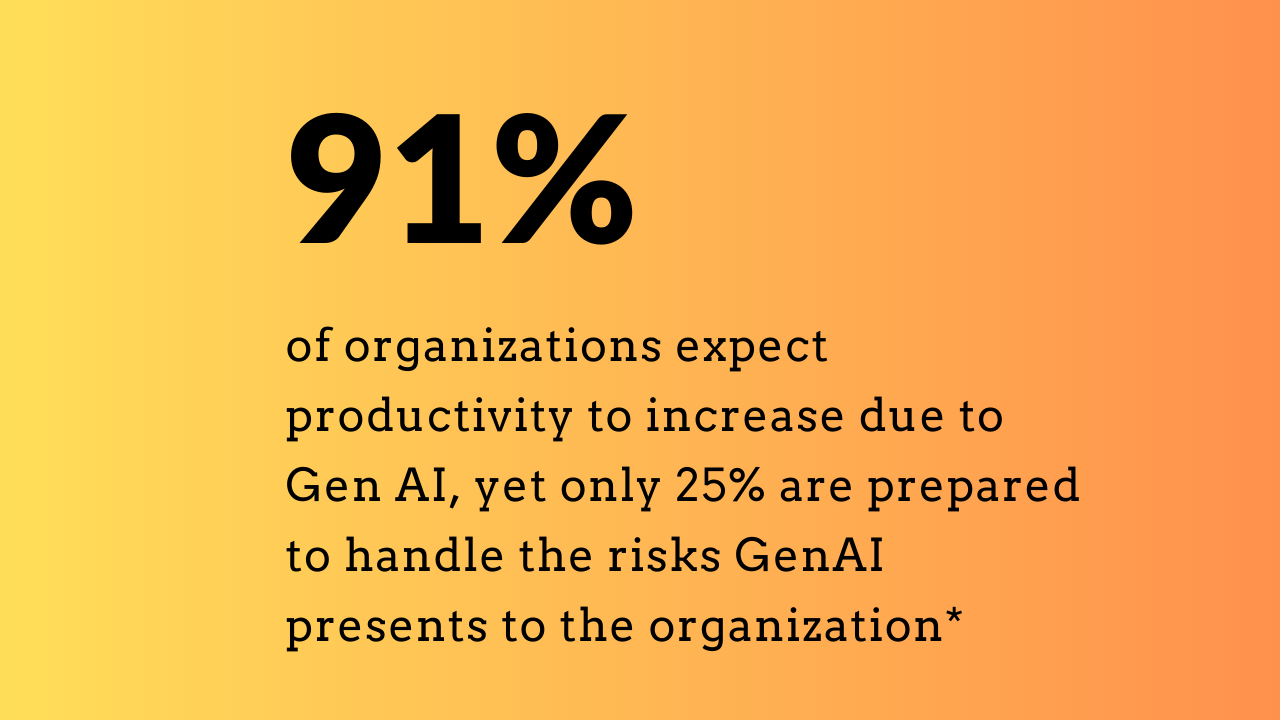
49%
of organizations say they'll institute an AI ethics program
33%
of organizations audit their AI systems for bias
35%
of organization are prepared to meet EU's regulatory requirements



Why AI governance matters
Without clear guardrails, AI systems can introduce bias, security vulnerabilities, legal exposure, and reputational risk. In fact, a lack of oversight is one of the leading reasons AI initiatives stall or fail to scale. *
AI governance provides the structure needed to responsibly manage AI technologies—defining roles, setting ethical standards, ensuring regulatory compliance, and aligning AI with business goals. It helps organizations mitigate risk while building trust among stakeholders, employees, and customers.
As AI becomes deeply embedded in decision-making processes, from hiring to healthcare, governance ensures systems are fair, secure, transparent, and aligned with human values.
With governance, companies can confidently innovate, scale solutions responsibly, and unlock AI’s full enterprise value.
What you can do
Establish an AI Governance program in your organization
Adopt a responsible AI governance program that establishes accountability and escalation paths, decision rights, and oversight structures across your AI lifecycle.
Implement AI risk and impact assessments
Evaluate risks across your AI use cases, applications, and systems using qualitative and quantitative assessments to identify, assess, and mitigate threats, while enhancing security and ensuring compliance.
Train users in AI ethics and literacy
Provide comprehensive AI ethics and literacy training for all your employees and relevant stakeholders across the AI value chain, enabling them to understand AI’s opportunities, risks, security, privacy, legal obligations, and potential harms.
Independent audit of AI systems
Engage independent audits to evaluate AI systems for fairness, accuracy, security, and compliance—ensuring accountability and informed governance.
What you'll achieve

Mitigate risk and ensure compliance
Navigate requirements like the EU AI Act, NIST AI RMF, and internal policies to avoid reputational damage.
Drive the development and maturity of AI governance
Advance accountability and escalation paths, decision rights, and oversight structures across your AI lifecycle.
AI ethics education, training, and awareness (AIETA)
Build a strong and AI-capable workforce that recognizes opportunities, and risk, and are ready to advance organizational goals.
Trending in Responsible AI
Should Organizations Be Concerned About Post-Quantum Cryptography?
Discover why organizations must prepare for post-quantum cryptography, the risks quantum computing poses, and strategies for becoming quantum-safe. ...more
AI Governance
January 14, 2026•3 min read

The Strange Job of Breaking AI on Purpose - AI Red Teaming
Learn what AI red teaming is, how experts break AI models to expose vulnerabilities, and why prompt injection is one of the biggest risks in modern LLM systems. ...more
AI Governance
January 10, 2026•8 min read
SB 53, AI Safely, and AI Governance
California's new AI safety law signals something bigger than compliance; it marks the moment AI governance became a real profession ...more
AI Governance
January 09, 2026•6 min read
Let's talk
Copyright 2026. Obi Ogbanufe. All Rights Reserved.